

Licensed waste management technicians empty your portable toilets using specialized vacuum trucks that create sealed connections to the unit’s waste compartment. These industrial-grade pumping systems generate over 400 CFM suction pressure, extracting waste through reinforced 4-inch hoses into containment tanks. You’ll need certified haulers with proper California permits who transport waste to EPA-approved treatment facilities following strict health department protocols. Understanding the complete process guarantees you select compliant service providers for your Long Beach location.
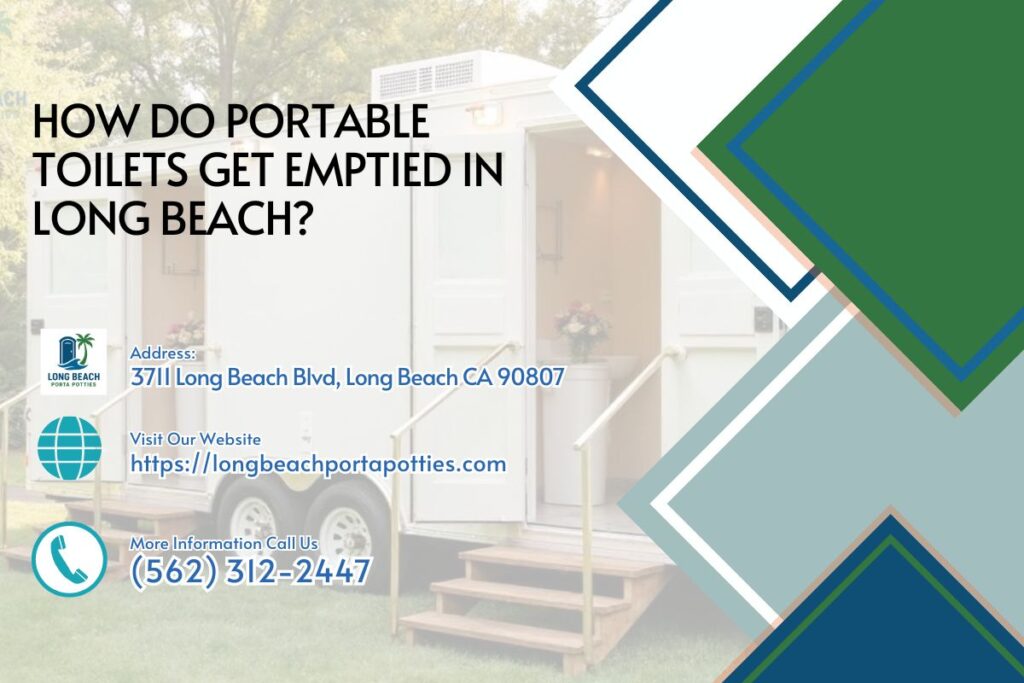
When you rent a portable toilet from Long Beach Porta Potties, waste removal is conducted by strict sanitation protocols mandated by California health regulations.
Our certified technicians use specialized vacuum trucks equipped with high-powered pumps to extract waste and liquids from holding tanks. The process begins by connecting sealed hoses to the unit’s waste compartment, which prevents spillage and contamination.
We’ll remove all contents, then pressure-wash interior surfaces with EPA-approved disinfectant solutions. Fresh water and blue deodorizing chemicals are added to restore the unit’s functionality.
All extracted waste is transported to licensed treatment facilities that comply with the standards of the Long Beach Municipal Water Department.
This systematic approach guarantees your portable toilet meets health department requirements while maintaining sanitary conditions for users.
See also: Long Beach portable toilet rental service
Our vacuum trucks employ industrial-grade pumping systems that generate suction pressures exceeding 400 CFM to extract waste materials from portable toilet holding tanks.
You’ll see our technicians connect reinforced hoses directly to tank access ports, creating sealed connections that prevent spillage during extraction. The vacuum system draws waste through 4-inch diameter hoses into the truck’s sealed containment tank, which holds up to 1,500 gallons.
Our operators monitor pressure gauges and flow indicators to guarantee complete evacuation of solid and liquid waste.
They’ll also inject fresh water through additional hoses to rinse tank walls and remove residual buildup. This dual-action process ensures thorough cleaning while adhering to EPA-compliant waste handling standards.
The entire extraction takes approximately 3-5 minutes per unit, depending on waste volume and tank configuration.
Inside the holding tank, waste materials undergo biochemical decomposition processes that create methane, hydrogen sulfide, and ammonia gases. You’ll find these tanks engineered with specialized venting systems to prevent the accumulation of dangerous gases and maintain safe pressure levels.
The decomposition occurs through anaerobic bacterial activity, breaking down organic matter while producing characteristic odors. Chemical additives you’ve likely noticed help neutralize pH levels and control bacterial growth.
| Process Component | Function |
|---|---|
| Anaerobic Bacteria | Breaks down organic waste materials |
| Chemical Additives | Controls pH and reduces odor formation |
| Venting System | Prevents dangerous gas accumulation |
| Pressure Relief | Maintains safe internal tank pressure |
| Decomposition Gases | Methane, hydrogen sulfide, ammonia byproducts |
Regular servicing prevents overflow conditions and maintains proper biochemical balance within your portable toilet’s waste management system.
After removal from your portable toilet, waste materials follow a strictly regulated disposal pathway that guarantees environmental protection and public health safety.
You can trust that Long Beach Porta Potties adheres to all federal and state mandates governing waste transport and treatment.
The disposal process follows these regulated steps:
You can be assured that every gallon receives proper treatment through established municipal infrastructure, ensuring your portable toilet rental supports Long Beach’s environmental stewardship commitments.
When waste removal begins at your portable toilet site, specialized vacuum trucks transport all collected materials exclusively to state-licensed disposal facilities that maintain active permits under California’s wastewater management regulations.
These facilities operate under strict environmental protocols established by the State Water Resources Control Board.
You’ll find that authorized treatment plants utilize multi-stage processing systems designed specifically for portable toilet waste.
The transport vehicles follow designated routes to minimize environmental impact while maintaining compliance with Department of Transportation hazardous materials guidelines.
Each facility maintains detailed records of incoming waste volumes, treatment processes, and final disposal methods.
This documentation guarantees full regulatory compliance while protecting Long Beach’s water resources.
The entire transport chain operates under continuous oversight from both state and local environmental agencies.

Upon arrival at licensed treatment facilities, portable toilet waste undergoes primary screening processes that separate solid materials from liquid components using mechanical filtration systems.
You’ll find these facilities employ multi-stage treatment protocols that guarantee complete pathogen elimination and environmental protection.
The processing sequence includes:
These facilities must maintain EPA-compliant certifications and conduct regular testing to verify the effectiveness of their treatment.
You can be assured that Long Beach’s waste management infrastructure complies with California’s stringent environmental regulations.
Regular servicing schedules for portable toilets in Long Beach depend on factors such as usage frequency, environmental conditions, and regulatory requirements. You’ll need to adjust service intervals based on these critical factors to maintain sanitary conditions and compliance.
| Usage Level | Service Frequency |
|---|---|
| Light Use (1-10 people) | Weekly |
| Moderate Use (10-50 people) | 2-3 times per week |
| Heavy Use (50+ people) | Daily |
Standard units require pumping when waste reaches 75% capacity. You must increase frequency during hot weather, as heightened temperatures accelerate decomposition and odor development. California health codes mandate minimum service intervals for construction sites and public events. Exceptional circumstances, such as festivals or emergencies, may require multiple daily services to prevent overflow and maintain public health standards.
Standard cleaning protocols for portable toilets go beyond basic waste removal to include thorough sanitization procedures.
You’ll find that professional servicing follows established schedules designed to maintain hygiene standards and regulatory compliance throughout your rental period.
Regular maintenance intervals depend on usage patterns and environmental conditions:
Each service visit includes waste pumping, tank sanitization, restocking of toilet paper, and refills of hand sanitizer.
You’re guaranteed fresh supplies and properly functioning equipment.
Professional technicians follow health department guidelines, ensuring that your portable facilities consistently meet Long Beach sanitation requirements.
When hosting large-scale events, festivals, or gatherings with anticipated attendance exceeding 500 people, you’ll need improved service protocols that go beyond standard weekly maintenance schedules.
High-traffic scenarios require more frequent waste removal and restocking cycles to maintain sanitary conditions and regulatory compliance.
For events with high usage expectations, we’ll implement twice-daily service rounds during peak activity periods. This includes complete waste tank evacuation, fresh water replenishment, and restocking of consumables every 12 hours.
Multi-day events receive thorough cleaning between each service cycle.
We’ll calculate ideal unit quantities using a ratio of one toilet per 50-75 attendees for events lasting 4-8 hours. Hand-washing stations receive proportional increases in soap and sanitizer refills.
Real-time monitoring guarantees immediate response to capacity thresholds, preventing overflow situations that compromise public health standards.
Since Long Beach operates under California’s stringent environmental protection framework, all portable toilet waste must comply with municipal sewage treatment protocols and state-mandated disposal procedures.
You’ll need to verify that your service provider adheres to these regulations, as violations can result in significant penalties and environmental damage.
The disposal process follows strict regulatory requirements:
These regulations protect Long Beach’s water quality and public health while verifying responsible waste management practices.
Beyond state-level requirements, Long Beach County implements supplementary environmental guidelines that directly impact portable toilet operations and waste management protocols.
You’ll find these local regulations establish stricter discharge standards for wastewater treatment facilities and mandate specific documentation procedures for waste tracking.
The county requires you to maintain detailed manifests that show the origin of waste, transportation routes, and final disposal locations. You must guarantee your service provider holds current permits for both collection and disposal operations within county boundaries.
Furthermore, you’re responsible for verifying that waste disposal occurs only at county-approved facilities meeting improved treatment standards.
Local environmental guidelines also specify buffer zones near sensitive areas, such as wetlands, and require expedited reporting timelines for any spill incidents that occur during collection or transport operations.
Operating portable toilets in Long Beach requires securing multiple permits through the county’s Environmental Health Department, with waste hauler certification serving as the foundation of your compliance framework.
You’ll need to verify that your chosen service provider maintains current approvals for the transportation and disposal of liquid waste. The county maintains a registry of certified haulers who’ve demonstrated proper equipment maintenance, driver training, and environmental compliance protocols.
Essential permit requirements include:
Non-compliance results in immediate service suspension and potential fines.
You’re responsible for confirming your hauler’s permit status remains current throughout your rental period.
When selecting a portable toilet service provider in Long Beach, you must verify their California contractor’s license and specialized certifications before signing any rental agreement.
Licensed providers maintain proper insurance coverage, adhere to EPA waste disposal protocols, and comply with local health department regulations.
You’ll need to confirm the company holds current OSHA certifications for hazardous waste handling and possesses valid commercial vehicle permits for waste transport.
Request documentation proving their waste disposal facility partnerships meet state environmental standards.
Licensed providers also maintain detailed service records, follow scheduled pumping intervals, and use approved sanitizing chemicals.
They’ll provide proper placement permits when required and guarantee compliance with Long Beach’s waste management ordinances.
Always verify their business license through California’s Contractors State License Board database before finalizing your rental contract.
Although licensed service providers handle initial waste collection, you must separately evaluate their certified waste management partners to confirm complete regulatory compliance throughout the disposal chain.
Certified waste management companies operate under strict environmental regulations and maintain specialized treatment facilities to ensure the safe disposal of waste. They’re required to process sewage waste through approved methods that meet EPA standards and local water quality requirements.
When selecting your porta potty service, verify that their waste management partnerships include:
You’ll need confirmation that waste is correctly disposed of at licensed treatment plants rather than unauthorized dumping sites.
Request documentation that shows the complete disposal pathway, from collection through final treatment, to confirm that your event meets all regulatory requirements.
Professional service technicians arrive at your location following established protocols that guarantee both sanitation standards and operational efficiency.
You’ll observe technicians wearing protective equipment, including gloves, safety glasses, and coveralls, as required by health regulations.
The pumping process begins with connecting specialized vacuum equipment to your unit’s waste tank. Technicians extract all liquid and solid waste through sealed hose systems that prevent spillage and contamination.
They’ll then add fresh water and eco-friendly deodorizing chemicals to restore functionality.
During servicing, technicians inspect door mechanisms, ventilation systems, and toilet paper dispensers for proper operation.
They’ll replace consumables, including toilet paper, hand sanitizer, and urinal blocks, as needed. The entire process typically requires fifteen to twenty minutes per unit, ensuring minimal disruption to your site operations.
If you damage a porta potty during waste removal, you’ll immediately stop operations, assess safety risks, document the incident, and contact your supervisor. You must follow company protocols and regulatory reporting requirements before resuming service.
You can typically service porta potties during mild weather, but severe conditions, such as heavy rain or high winds, may delay servicing for safety reasons. We’ll reschedule maintenance to guarantee technician safety and proper waste handling procedures.
You’ll pay $50-$ 150 per service visit for porta potty waste removal in Long Beach, depending on the unit size and frequency. We’ll provide exact pricing based on your specific needs and guarantee that all waste disposal meets local environmental regulations.
Yes, we provide 24/7 emergency waste removal services throughout Long Beach. You’ll receive priority scheduling for urgent situations, such as overflows or event emergencies. Contact our dispatch immediately—we’ll deploy certified technicians within hours to restore sanitary conditions.
Our technicians wear OSHA-compliant protective gear, including nitrile gloves, safety goggles, respirators, waterproof coveralls, and steel-toed boots. You’ll see they follow strict PPE protocols to prevent exposure to hazardous materials and guarantee regulatory compliance during service operations.



© 2026 Long Beach Porta Potties. All Rights Reserved.